
Published September 2026.
The hamsa hand meaning goes back thousands of years before it ever showed up on a bracelet: this palm-shaped amulet, with its five spread fingers, is one of the oldest protection symbols still worn today. It shows up across Jewish, Islamic, and broader Middle Eastern and North African traditions, always carrying the same core idea, warding off harm and inviting blessing, even as the details of the story change from one culture to the next.
What Is the Hamsa Hand?
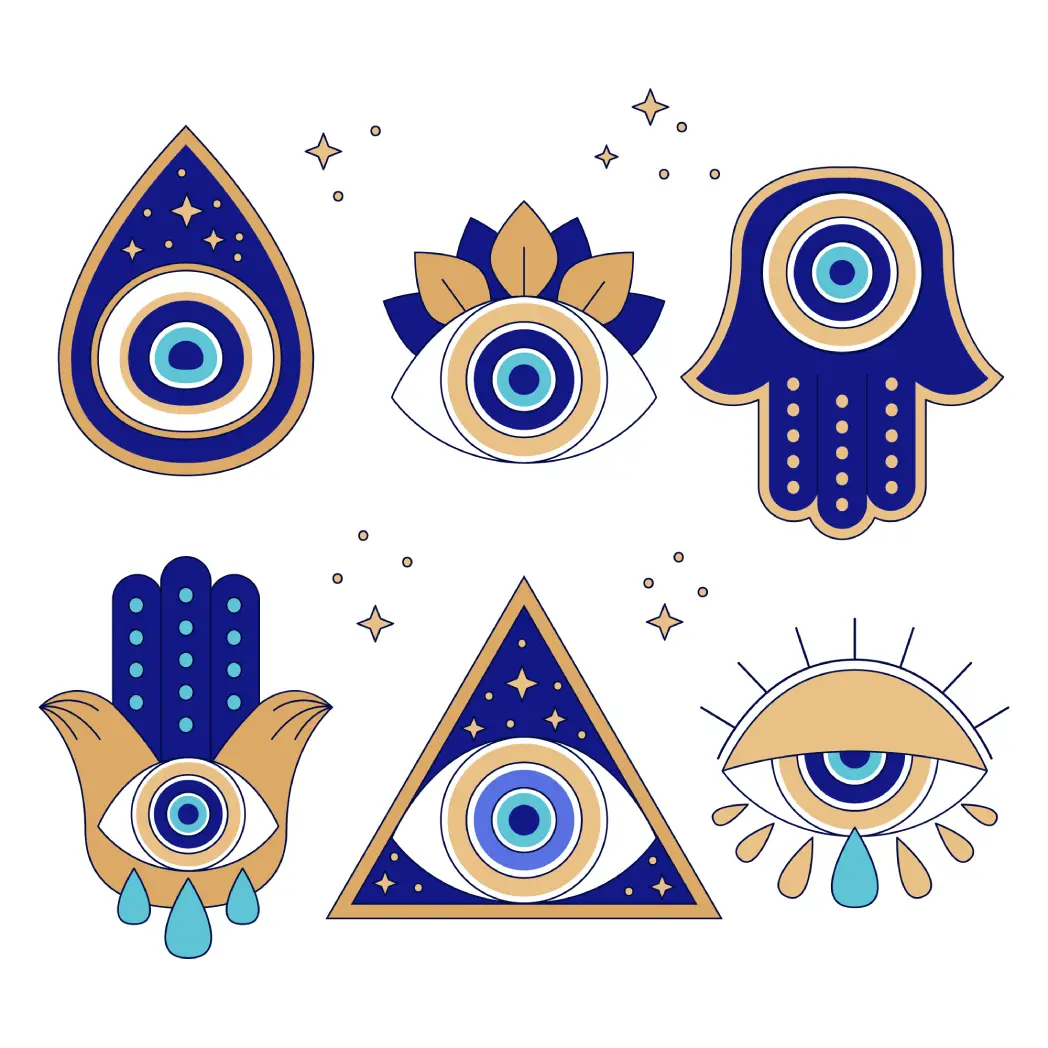
The hamsa is a palm-shaped amulet featuring five fingers, usually with the thumb and pinky mirrored so the hand looks symmetrical rather than anatomically exact. The word “hamsa” comes from the Arabic root for “five,” a direct reference to the five fingers themselves. Many versions of the symbol include an eye in the center of the palm, a detail that blends the hamsa with evil eye protection into a single, layered amulet.
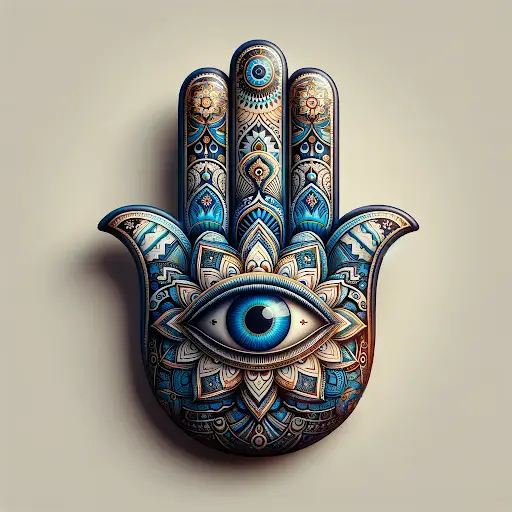
Archaeologists trace hamsa-like hand symbols back to ancient Mesopotamia and Carthage, long before either Judaism or Islam existed in their current forms. Both religions later adopted and named the symbol independently, which is part of why the hamsa hand meaning feels so universal: it was never owned by a single tradition to begin with.
The Meaning Behind the Five Fingers
Because “hamsa” literally means five, the number itself carries weight in how the symbol is read. Five is considered a protective, complete number across several of the traditions that use the hand, and that idea shows up in a few consistent ways:
- The five senses — a reminder to stay alert and aware, since protection starts with paying attention.
- The five books of the Torah — in Jewish tradition, the hand is sometimes linked to the Five Books of Moses.
- The Five Pillars of Islam — in Islamic tradition, the hand is sometimes tied to the five foundational obligations of the faith.
- Balance and wholeness — five fingers working together, echoing a complete, balanced hand ready to block harm.
None of these readings cancel each other out. Most people who wear a hamsa today are drawn to the general idea of protection and blessing rather than one specific interpretation of the five fingers.
Hamsa Hand Meaning Across Religions and Cultures
The same symbol carries a few different names depending on where you encounter it, and each name comes with its own story:
- Hand of Miriam (Jewish tradition) — named for Miriam, sister of Moses and Aaron, associated with protection and, in some readings, women’s strength and leadership.
- Hand of Fatima (Islamic tradition) — named for Fatima, daughter of the Prophet Muhammad, associated with patience, faith, and protection for the household.
- Khamsa (broader North African and Middle Eastern folk tradition) — worn across the region regardless of religion, often simply called “the five” and used to ward off the evil eye.
The Encyclopaedia Britannica’s entry on the hamsa traces this shared history in more depth, and it’s a useful, secular starting point if you want to read further into how the symbol moved between cultures over the centuries.
Hamsa Hand vs. Evil Eye: How They Work Together
The hamsa and the evil eye are two different symbols that get combined so often people sometimes assume they’re the same thing. They’re not, though they’re built to work as a pair.
| Hamsa Hand | Evil Eye (Mal de Ojo) |
|---|---|
| A hand shape with five fingers | A stylized eye, usually blue and white |
| Represents blessing, protection, and balance broadly | Specifically wards off envious or ill-wishing stares |
| Rooted in Jewish, Islamic, and North African tradition | Rooted in Mediterranean, Middle Eastern, and Latin American tradition (Mal de Ojo) |
| Often worn alone as a standalone amulet | Often placed inside a hamsa’s palm for a combined effect |
When an eye appears inside the hamsa’s palm, as it does in many pieces of jewelry, the two symbols are essentially stacking their protection: the hand deflects, and the eye watches. If you want the fuller picture on the eye half of that pairing, the Evil Eye Meaning guide covers Mal de Ojo in detail.
Which Way Should a Hamsa Hand Face?
This is one of the most common questions about the symbol, and different traditions answer it differently:
- Fingers up — the most common orientation in jewelry, generally read as actively deflecting negative energy and blocking harm before it arrives.
- Fingers down — associated with inviting positive energy, abundance, and blessings toward the wearer rather than blocking something out.
Neither direction is considered wrong. Most people choose based on which meaning, protection or invitation, feels more relevant to what they need right now, and it’s common to see both orientations used interchangeably in modern jewelry that draws on the hamsa hand meaning.
How to Use a Hamsa Hand for Protection
Once you know the hamsa hand meaning, using one for yourself is simple. The symbol shows up in a few different everyday forms, and the meaning holds regardless of which one you choose:
- Jewelry — necklaces, bracelets, and earrings worn close to the body for ongoing, personal protection.
- Wall hangings and home decor — hung near a doorway or entrance to protect the household and everyone who passes through it.
- Keychains and car charms — a portable version of the same idea, protection that travels with you.
- Gifts — the hamsa is considered a meaningful, welcome gift for new babies, new homes, and new beginnings in general, since it wishes protection and blessing on the recipient.
A Community Story
A story we hear a version of often: someone picks up a hamsa piece on a trip, or is gifted one by a grandmother, with no explanation beyond “it’s for protection.” Years later, they finally look up the hamsa hand meaning and realize the piece they’ve been wearing quietly their whole life connects them to a tradition going back thousands of years, and to family members who wore the same symbol long before they did.
That’s part of why the symbol has held on for so long: it travels well between generations, and it means something whether or not the person wearing it knows the full history yet.
Wear the Protection
Our Healing Hamsa Red String Protection Bracelet combines the hamsa’s five-fingered blessing with the red string’s own protective tradition and a watchful evil eye, layering three protection symbols into one everyday piece.
Frequently Asked Questions
What does the hamsa hand mean?
The hamsa hand meaning centers on protection and blessing: it’s a palm-shaped amulet meant to ward off negative energy, especially the evil eye, while inviting good fortune to the wearer.
Why does the hamsa have five fingers?
“Hamsa” comes from the Arabic word for “five.” The five fingers are read as a symbol of balance and completeness, and are variously linked to the five senses, the Five Books of Moses, or the Five Pillars of Islam depending on the tradition.
What’s the difference between a hamsa and an evil eye?
They’re two different symbols that are often combined. The hamsa is a hand shape representing broad protection and blessing; the evil eye is a stylized eye that specifically wards off envious stares. Many pieces of jewelry place an eye inside the hamsa’s palm to combine both effects.
Which way should a hamsa hand face?
Fingers up is the most common orientation and is read as actively blocking negative energy. Fingers down is associated with inviting positive energy and abundance. Neither direction is considered incorrect.
Is the hamsa hand Jewish or Muslim?
Both, along with older folk traditions that predate either religion. Jewish tradition calls it the Hand of Miriam, Islamic tradition calls it the Hand of Fatima, and it is also worn broadly across North Africa and the Middle East as a general folk protection symbol.
Can anyone wear a hamsa hand?
Yes. While the symbol carries religious meaning in Jewish and Islamic tradition, it has also long been worn as a general cultural and protective symbol, and people outside either faith commonly wear it respectfully for that broader meaning.
Does a hamsa need an eye in the palm to work?
No. A plain hamsa without an eye carries its own complete meaning of protection and blessing. The eye is a common addition that layers evil eye protection on top of the hamsa’s meaning, not a required part of the symbol.
Is the hamsa hand religious or just spiritual?
It can be either, depending on who is wearing it. It has specific religious meaning within Judaism and Islam, and a broader, more general spiritual and cultural meaning for people outside those traditions.
Written by Lucky One
Lucky One is the voice behind the One Lucky Wish Blog. As part of the father-daughter team running One Lucky Wish from their home in Maryland, Lucky One writes about angel numbers, crystals, spiritual jewelry, and the everyday practice of inviting more meaning, protection, and abundance into your life. Every piece of jewelry that ships from One Lucky Wish is personally handled, cleansed, and charged with positive intention by the same people who write these words.
Related Reading
Continue exploring the hamsa hand meaning and the symbols connected to it:
- Evil Eye Meaning: The Complete Guide to Mal de Ojo
- 10 Good Luck Symbols From Around the World
- The Power of Red String Protection Bracelets