
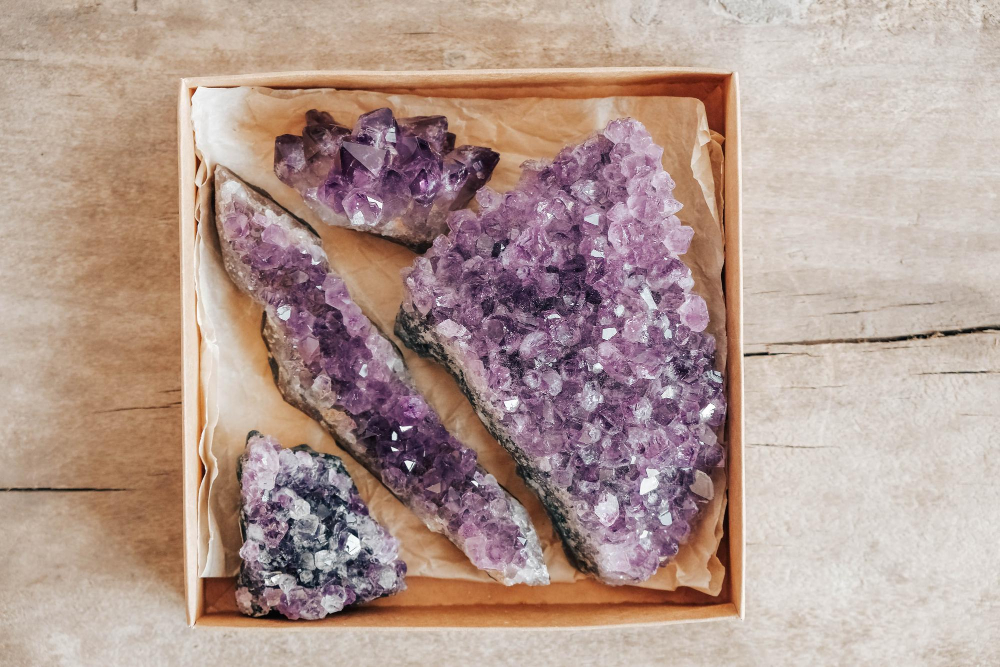
The word amethyst meaning goes back thousands of years: this violet quartz crystal has been prized as a stone of calm, clarity, and protection since antiquity, worn by royalty, buried with the pharaohs, and set into the breastplate of the biblical high priest. Its name comes from the Greek word amethystos, meaning “not intoxicated,” a nod to the ancient belief that the stone could keep its wearer sober and clear-headed.
Today, amethyst remains one of the most popular crystals in the world, valued as much for its striking purple color as for what it is believed to bring: peace of mind, spiritual insight, and a calmer, steadier energy. This guide covers everything you need to know: what amethyst really means, its history and formation, its healing and metaphysical properties, how to use and cleanse it, and how to choose the right piece for you.
In This Guide
Originally published June 2024. Updated September 2026 with expanded amethyst meaning coverage, healing properties, and buying guidance.
What Does Amethyst Mean?
At its core, the amethyst meaning is tied to calm, clarity, and protection. Amethyst is a purple variety of quartz, one of the most abundant minerals on earth, and its color ranges from a soft lavender to a deep, almost royal violet. That color comes from trace amounts of iron within the crystal structure combined with natural irradiation, and the intensity can vary within a single piece, often creating a beautiful gradient from edge to center.
Spiritually, amethyst is considered a stone of the mind and spirit rather than the body. Where a stone like black onyx is associated with grounding and protection from outside negativity, amethyst is associated with turning inward: quieting a busy mind, supporting meditation, and helping you access clearer intuition and better decision making.
Appearance, Structure, and Formation
As a variety of quartz, amethyst forms in a trigonal crystal system, typically growing in clusters of pointed crystals inside geodes or as druzy formations lining the inside of a rock cavity. Individual crystals often show a hexagonal prism shape with a pyramid-like point at one or both ends, which is part of what makes amethyst so easy to recognize and so satisfying to display in raw form.
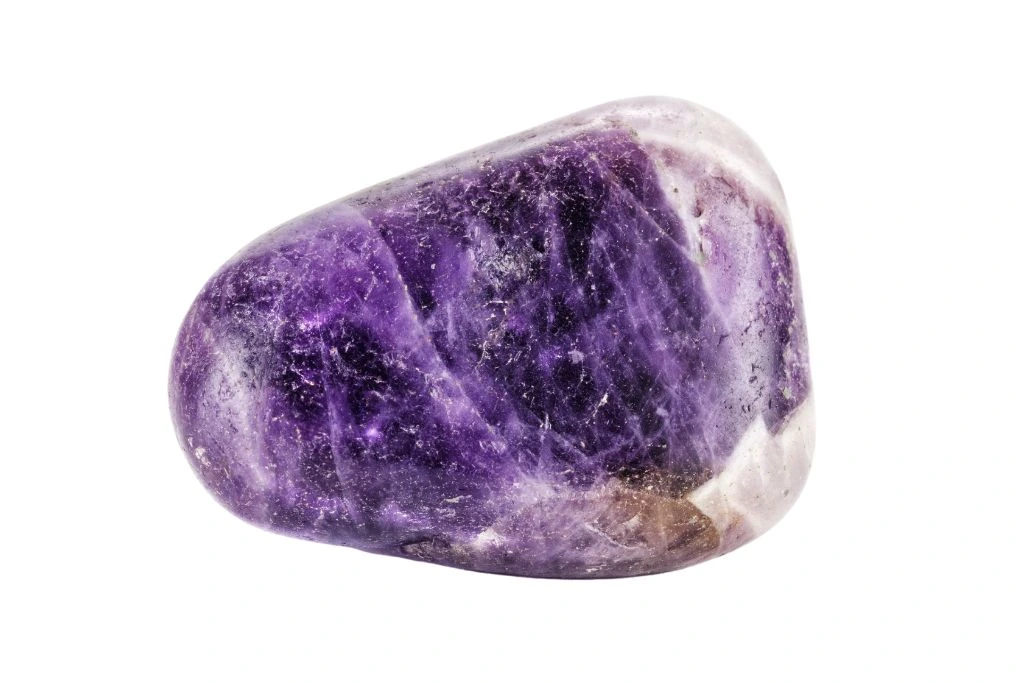
One of amethyst’s more unusual traits is pleochroism, meaning the stone can appear to shift color slightly depending on the angle it is viewed from. Many pieces also contain natural inclusions, sometimes called “tiger stripes” or “phantom” formations, which add depth and character rather than detracting from the stone’s value. High-quality amethyst is typically transparent to translucent with a glassy, vitreous luster, and it sits at 7 on the Mohs hardness scale, meaning it holds up well to everyday wear in jewelry.
Colors and quick reference
Colors: Light lavender to deep violet, occasionally with rose or smoky undertones
Planets: Jupiter, Saturn
Chakra: Crown, Third Eye
Zodiac: Aquarius, Capricorn, Pisces
Element: Air, Water
Numerical Vibration: 3
Feng Shui direction: Southeast
Shop Raw Amethyst at One Lucky Wish
Our natural raw amethyst healing stones are hand-selected for their color and clarity, perfect for meditation, display, or building your own crystal collection.
History and Legends of Amethyst
Amethyst has been treasured across cultures for thousands of years, and at times in history it was valued as highly as diamond. The Ancient Egyptians carved it into amulets for both prayer and protection. The Greeks associated it with Dionysus, the god of wine, believing the stone could ward off intoxication, which is exactly where its name comes from: amethystos, “not intoxicated.” In medieval Europe, amethyst adorned the rings and crowns of bishops and royalty, becoming a symbol of piety, sobriety, and high status.
The stone also appears in religious history. Amethyst is named in the Old Testament as one of the twelve stones representing the twelve tribes of Israel and is traditionally counted among the gems set into the breastplate of the high priest Aaron. Centuries later it became one of the cardinal gems of the Catholic Church, worn by bishops as a symbol of spiritual devotion.
If you want to go deeper into the folklore, from the myth of how amethyst got its purple color to the legend connecting it to Saint Valentine, our guide to amethyst superstitions and legends covers the full stories in detail.
Amethyst Healing Properties and Metaphysical Meaning
In metaphysical and crystal healing traditions, amethyst is considered one of the most versatile stones for the mind and spirit. Here is what it is most commonly associated with.
Calm and stress relief
Amethyst is often called a natural tranquilizer. It is believed to soothe an overactive mind, ease irritability, and help balance mood swings, which is why so many people keep a piece on a nightstand or work desk.
Clarity and intuition
Because amethyst is linked to the third eye and crown chakras, it is associated with sharper intuition and clearer thinking. Many people use it during meditation or quiet reflection to help cut through mental noise and access more grounded insight.
Spiritual protection
Like many purple stones, amethyst is considered protective on a spiritual level, thought to create a calming shield against negative energy and to support a more peaceful home or workspace.
Breaking unwanted habits
Going back to its original Greek meaning, amethyst is still associated today with self-control and breaking unwanted patterns, particularly around overindulgence. Some keep it nearby as a quiet reminder of the intention to stay balanced and clear-headed.
Better sleep
Amethyst is one of the most recommended crystals for sleep support. Many people place a piece under their pillow or on a nightstand to help quiet the mind before bed. Our guide to crystals for better sleep covers how to pair amethyst with other stones for a full nighttime ritual.
As with all crystal healing practices, these are traditional and spiritual beliefs rather than medical claims, and amethyst should be treated as a complement to, not a replacement for, professional medical care.
Chakra, Zodiac, and Birthstone Associations
Amethyst is most closely associated with the crown chakra, at the top of the head, which governs spiritual connection and higher awareness, and the third eye chakra, between the brows, which governs intuition and insight. Placing amethyst on or near either point during meditation is a common practice for people working with chakra energy.
Amethyst is also the official birthstone for February, making it a popular and meaningful gift for anyone born that month. In astrology, it is most closely tied to Pisces, Aquarius, and Capricorn, though many people outside those signs wear it simply for its calming associations.
How to Use Amethyst
Wear it as jewelry
Amethyst is durable enough for daily wear at 7 on the Mohs scale, making it a great choice for rings, pendants, and bracelets you want to keep close to you throughout the day.
Keep a raw piece nearby
A raw amethyst cluster on a desk, nightstand, or shelf is one of the simplest ways to bring its calming presence into a space without wearing it.
Use it in meditation
Hold a piece in your hand or place it at your third eye or crown during meditation to support focus and a quieter mind.
Pair it with other crystals
Amethyst pairs well with clear quartz for amplified clarity and with rose quartz for a calming, heart-centered combination. Many crystal sets, including cluster kits, are built around these same pairings for exactly this reason.
Build a Full Crystal Ritual
Our Natural Amethyst and Crystal Cluster Set pairs a genuine amethyst block with clear quartz, rose quartz, a pendulum, and all seven chakra stones, arriving in a wooden gift box ready to use.
How to Cleanse and Charge Amethyst
Amethyst absorbs energy over time, so regular cleansing keeps it working at its best.
Moonlight
Set your amethyst on a windowsill or outside overnight under the moon, ideally during a full moon, to clear and recharge it naturally.
Smoke cleansing
Pass the crystal through the smoke of ethically sourced sage or palo santo for about 30 seconds, setting the intention that any absorbed energy is being released.
Sound
A singing bowl or a few minutes of resonant sound can help clear stagnant energy from the stone.
A note on sunlight and water
Unlike many crystals, amethyst should not be left in direct sunlight for extended periods, since strong sun can fade its purple color over time. It is also best to avoid prolonged soaking in water, especially for pieces set in jewelry, to protect both the stone and any metal settings.
Frequently Asked Questions
What does amethyst mean?
Amethyst meaning centers on calm, clarity, and protection. It is a purple variety of quartz traditionally associated with a peaceful mind, sharper intuition, and spiritual protection, and its name comes from the Greek word for “not intoxicated.”
What is amethyst good for?
Amethyst is most commonly used for stress relief, better sleep, meditation support, and mental clarity. It is also associated with breaking unwanted habits and creating a calmer, more balanced state of mind.
What chakra is amethyst associated with?
Amethyst is primarily associated with the crown chakra and the third eye chakra, both linked to intuition, insight, and spiritual connection.
Is amethyst a birthstone?
Yes. Amethyst is the official birthstone for February, making it a popular and meaningful gift for anyone born that month.
Can amethyst go in water?
Amethyst can generally tolerate brief contact with water, but prolonged soaking is not recommended, especially for jewelry pieces, since it can loosen settings or dull the stone’s shine over time.
How do you cleanse and recharge amethyst?
The most common methods are moonlight, smoke cleansing with sage or palo santo, and sound cleansing with a singing bowl. Avoid leaving amethyst in strong direct sunlight, since it can fade the color over time.
What is the difference between amethyst and clear quartz?
Amethyst and clear quartz are the same mineral, quartz, but amethyst gets its purple color from trace iron and natural irradiation within the crystal. Clear quartz is prized for amplifying energy generally, while amethyst is specifically associated with calm and intuition.
How can you tell if amethyst is real?
Genuine amethyst typically shows natural color zoning or gradient rather than perfectly uniform color, and it should feel cool to the touch and have a glassy luster. Buying from a source that describes the stone’s natural origin, rather than a dyed or synthetic substitute, is the most reliable way to know what you are getting.
Bringing Amethyst Into Your Life
Amethyst has earned its place as one of the most beloved crystals in the world by doing something simple and lasting: helping people feel calmer, clearer, and a little more protected. Whether you are drawn to it for its color, its history, or the peace of mind it is believed to bring, there is a place for amethyst in nearly any collection or daily practice.
Choose a raw piece if you want its presence in a room, a jewelry piece if you want to keep it close all day, or a full chakra set if you are ready to build out a deeper practice. However you bring it in, amethyst rewards a little intention with a lot of calm.
Written by Lucky One
Lucky One is the voice behind the One Lucky Wish Blog. As part of the father-daughter team running One Lucky Wish from their home in Maryland, Lucky One writes about angel numbers, crystals, spiritual jewelry, and the everyday practice of inviting more meaning, protection, and abundance into your life. Every piece of jewelry that ships from One Lucky Wish is personally handled, cleansed, and charged with positive intention by the same people who write these words.