
Published September 2026.
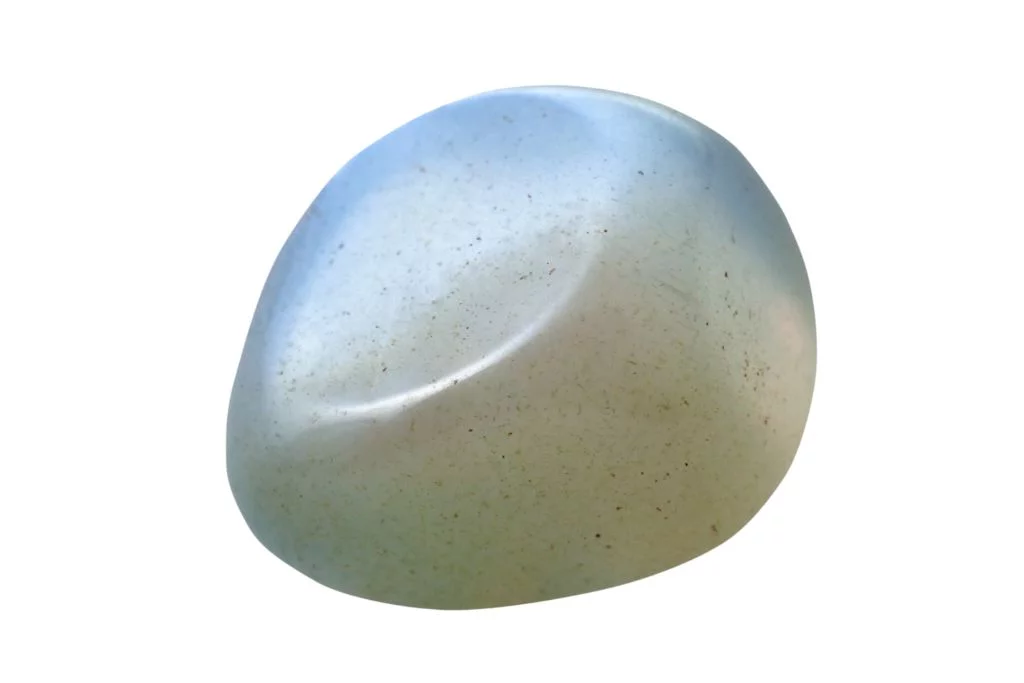
The moonstone meaning has been tied to the moon itself for thousands of years, and the stone earns that reputation honestly: turn it in the light and a soft, bluish glow seems to roll just beneath its surface, like moonlight caught in stone. That glow, called adularescence, is why moonstone (also known by its mineral name, adularia) has been carried as a talisman for intuition, emotional balance, and new beginnings across cultures from ancient Rome to India.
What Is Moonstone?
Moonstone is a variety of the mineral orthoclase feldspar, prized for adularescence: a billowy, bluish-white light that appears to float beneath the surface and shifts as the stone moves, similar to moonlight gliding over water. It typically forms in prismatic or tabular crystals with a soft, pearly luster, and its base color ranges from white or colorless to pale blue, gray, or peach.
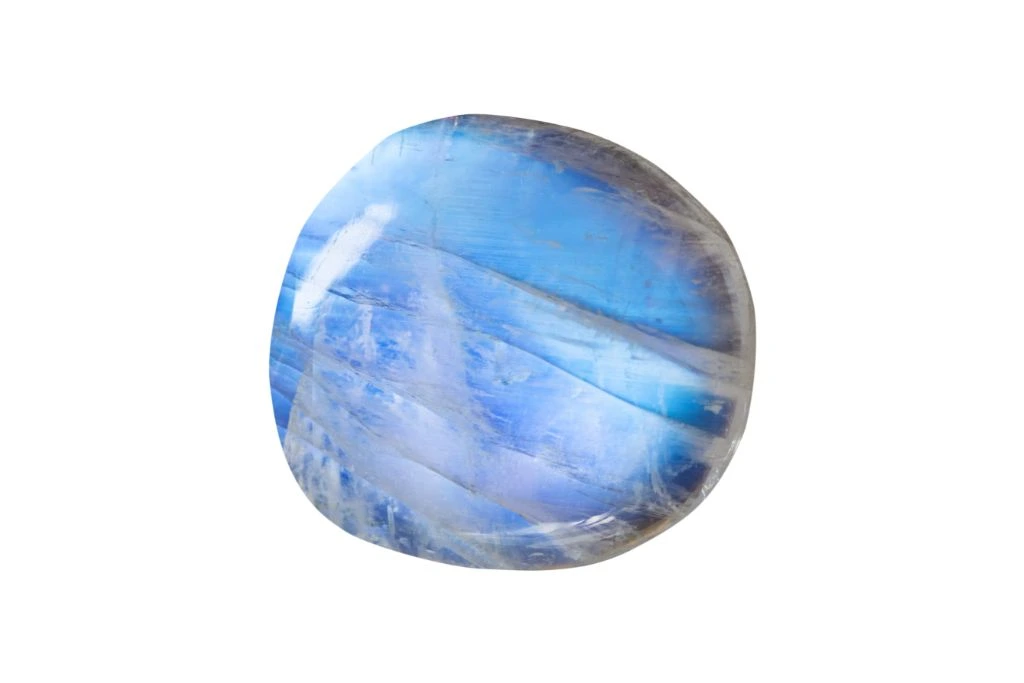
Some specimens also show chatoyancy, a thin bright line across the surface that shifts as the stone turns, or asterism, a star-like flash of reflected light. Combined with its glow, these optical effects are part of why moonstone has stayed a favorite in jewelry and crystal healing alike for so long.
Moonstone Colors and Varieties
Not all moonstone looks the same, and the color often shapes how it’s used:
- White or colorless moonstone — the most classic look, with a strong blue adularescent glow.
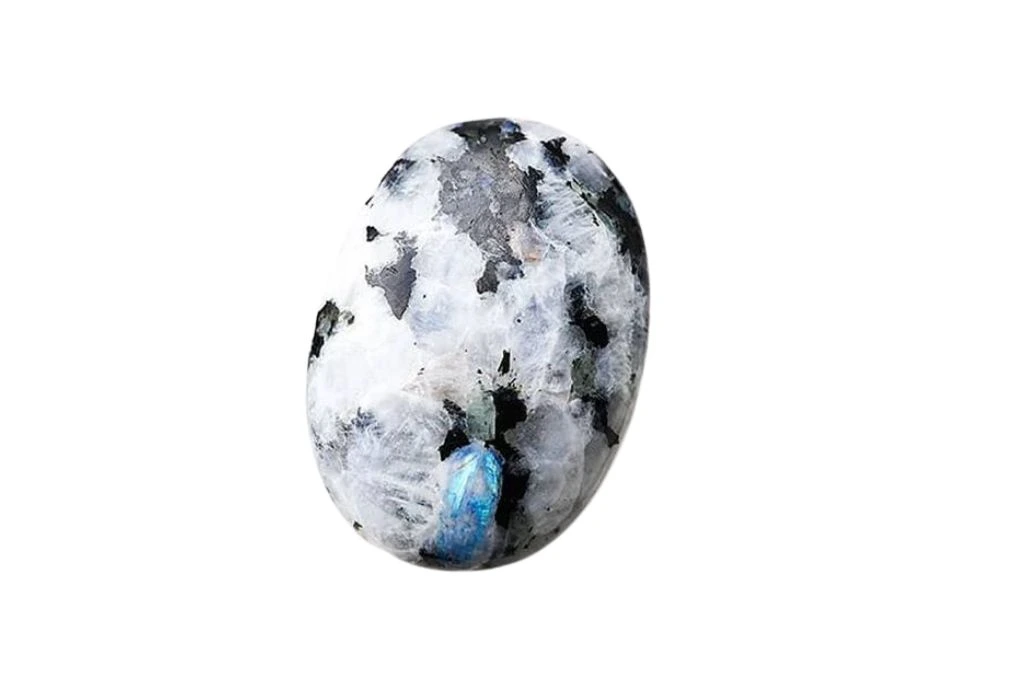
- Rainbow moonstone — technically a type of labradorite feldspar rather than true moonstone, but sold under the moonstone name for its similar milky, multicolor sheen.
- Peach and pink moonstone — a warmer variety associated with heart-centered, emotional healing work rather than the crown or third eye.
- Gray and black moonstone — a deeper, more grounding variation, often linked to root chakra work.
Moonstone Meaning and Healing Properties
In metaphysical practice, the moonstone meaning centers on intuition, emotional balance, and new beginnings. It’s commonly used in meditation and chakra work, especially around the crown and third eye, and is said to carry a soothing energy that helps settle stress and emotional turmoil. Many practitioners associate it with feminine energy and cycles, which lines up with its long history of being linked to the moon itself.
Moonstone at a Glance
Colors: White, blue, gray, peach, pink
Chakras: Crown, third eye, sacral, heart
Element: Water
Planet: Moon
Zodiac: Cancer
Numerical vibration: 4
Moonstone as a Birthstone
Moonstone is one of the official birthstones for June, shared with pearl and alexandrite. As a birthstone, it’s given the same general meaning it carries as a healing stone, intuition, emotional balance, and a fresh start, which makes it a popular gift for June birthdays, new beginnings, and life transitions like a move, a new relationship, or a new chapter of any kind.
Historical and Cultural Significance
Moonstone has been treasured across cultures for centuries. Ancient Romans believed it was formed from solidified moonlight, and in India it has long been considered a sacred stone, associated with lunar deities and used in religious ceremonies. Its glow has inspired myths connecting it to love, fertility, and intuition in traditions well beyond either of those two. The Gemological Institute of America’s guide to moonstone covers the mineralogy and formation behind the folklore in more depth, if you want the geological side of the story.
Moonstone vs. Labradorite: Are They the Same Stone?
Not quite, though the confusion is understandable; both are feldspar minerals and both can show a similar shifting glow. Moonstone’s signature effect, adularescence, is a soft, billowy blue-white light. Labradorite’s effect, called labradorescence, tends to flash in bolder blues, greens, and golds when the stone catches the light at certain angles. Rainbow moonstone, despite the name, is technically labradorite, which is why you’ll sometimes see the two names used almost interchangeably in jewelry listings.
How to Use Moonstone
Moonstone shows up in a few different everyday practices:
- Jewelry — commonly set in silver to complement its cool, lunar glow; a popular choice for necklaces, rings, and earrings worn for its meaning as much as its look.
- Meditation and chakra work — held or placed on the body during meditation, often near the crown or third eye.
- Under the pillow — a folk practice some people still follow today, said to encourage restful sleep and vivid dreams.
- Crystal grids — paired with other stones for a broader intention-setting layout.
A Community Story
A story that comes up often: someone going through a big transition, a move, a breakup, a new job, picks up a piece of moonstone almost on instinct, drawn to the glow without knowing anything about the meaning yet. It’s only later, usually after the transition has settled, that they look up the moonstone meaning and realize they’d been carrying a stone for new beginnings the entire time.
Whether that’s coincidence or something more, it’s a pattern we hear often enough to be worth mentioning.
Wear the Glow
Our Mystical Peach Moonstone Necklace pairs the warmer, heart-centered side of moonstone’s meaning with a soft, wearable everyday design.
Frequently Asked Questions
What does moonstone mean spiritually?
The moonstone meaning centers on intuition, emotional balance, and new beginnings. It’s associated with the moon and feminine energy, and is commonly used in meditation and chakra work for its calming, grounding qualities.
What are moonstone’s healing properties?
Moonstone is said to support intuition, emotional balance, and inner growth, and is often used in crown and third eye chakra work. Practitioners describe its energy as soothing, helpful for settling stress and emotional turmoil.
Is moonstone a real birthstone?
Yes. Moonstone is one of the official birthstones for June, alongside pearl and alexandrite.
What’s the difference between moonstone and labradorite?
Both are feldspar minerals with a similar shifting glow, but moonstone’s effect (adularescence) is a soft blue-white light, while labradorite’s effect (labradorescence) flashes in bolder blues, greens, and golds. Rainbow moonstone is technically labradorite sold under the moonstone name.
What does peach moonstone mean?
Peach and pink moonstone are considered a warmer variety of the stone, associated with heart-centered, emotional healing work rather than the crown or third eye focus of classic white or blue moonstone.
Is moonstone also called adularia?
Yes. Adularia is the mineralogical name for moonstone, referring to the same orthoclase feldspar variety known for its adularescent glow.
Where should you keep moonstone?
Common practices include wearing it as jewelry, holding it during meditation, placing it in a crystal grid, or keeping it under a pillow, a folk tradition believed to encourage restful sleep and vivid dreams.
Written by Lucky One
Lucky One is the voice behind the One Lucky Wish Blog. As part of the father-daughter team running One Lucky Wish from their home in Maryland, Lucky One writes about angel numbers, crystals, spiritual jewelry, and the everyday practice of inviting more meaning, protection, and abundance into your life. Every piece of jewelry that ships from One Lucky Wish is personally handled, cleansed, and charged with positive intention by the same people who write these words.
Related Reading
Continue exploring the moonstone meaning and the crystals connected to it:
- Healing Crystals: Unlock Wellness and Good Fortune
- What is Blue Sapphire?
- Top 10 Crystals for Better Sleep