
Published October 2026.
Straw breathing is one of the simplest calming exercises there is: breathe in through your nose, then breathe out slowly through a drinking straw. The straw makes your exhale longer and steadier than your inhale, and that longer exhale is what helps your breathing slow down and your body settle. Here is what straw breathing is, how it relates to pursed-lip breathing, the research behind slow exhales, and how to do it step by step, with a straw or with a breathing necklace you can wear every day.
A Reusable “Straw” You Can Wear
Our Meditative Breathing Necklace is a slim stainless steel pendant with a narrow channel, the same slow-exhale idea as a straw, made to be worn as everyday jewelry.
On this page:
- What Is Straw Breathing?
- Straw Breathing and Pursed-Lip Breathing
- Why a Longer Exhale Feels Calming
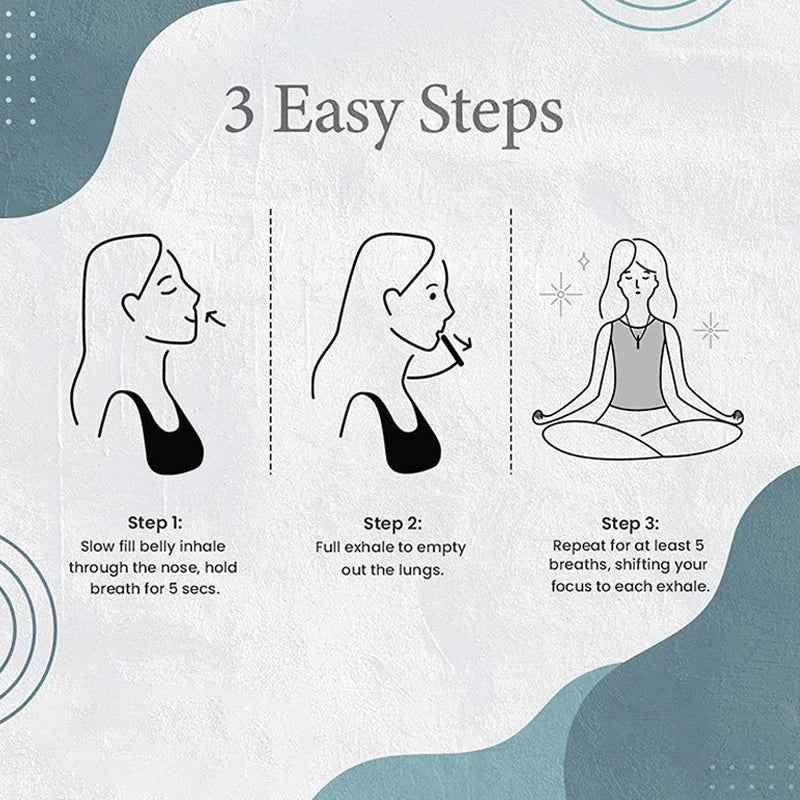
- How to Do Straw Breathing, Step by Step
- Straw Breathing With a Breathing Necklace
- When to Use Straw Breathing
- If You Have a Lung Condition
- Frequently Asked Questions
What Is Straw Breathing?
Straw breathing is a paced-breathing exercise. You take a gentle breath in through your nose, then exhale slowly through a straw held lightly between your lips. Because the straw is narrow, air can only leave so fast, so your exhale naturally becomes longer and smoother than your inhale. A common rhythm is in for about four seconds and out for six to eight.
It needs no equipment beyond a straw, takes a couple of minutes, and gives your mind something simple to focus on, which is a big part of why it feels grounding.
Straw Breathing and Pursed-Lip Breathing
Straw breathing is a close cousin of pursed-lip breathing, a technique respiratory therapists have taught for decades. The American Lung Association describes it this way:
- Relax your neck and shoulders.
- Breathe in slowly through your nose with your mouth closed.
- Purse your lips as if you were about to whistle or blow out a candle.
- Breathe out slowly through your pursed lips, making the exhale longer than the inhale.
A straw simply does the “pursing” for you, which many people find easier to get right, especially when they are first learning to slow down their breath.
Why a Longer Exhale Feels Calming
When you are stressed, breathing tends to get fast and shallow. Deliberately lengthening the exhale slows your overall breathing rate, and slow breathing is closely tied to the body’s “rest and digest” state.
Research supports the focus on the exhale. In a 2023 randomized study from Stanford published in Cell Reports Medicine, 108 adults practiced one of several five-minute daily breathing exercises, or mindfulness meditation, for 28 days. The exhale-focused practice, called cyclic sighing, produced the largest improvement in positive mood and the greatest drop in resting breathing rate compared with mindfulness meditation. Straw breathing is not the same exercise, but it shares the core idea: a long, controlled exhale.
How to Do Straw Breathing, Step by Step
- Get comfortable. Sit upright or stand with relaxed shoulders. Use a clean, ordinary drinking straw.
- Breathe in through your nose for a slow count of about four. Let your belly expand rather than lifting your shoulders.
- Place the straw lightly between your lips and breathe out slowly through it for a count of six to eight.
- Pause briefly when your lungs feel comfortably empty, then breathe in through your nose again.
- Repeat for two to five minutes. Keep it gentle; you should never feel strained.
Tips: If you feel dizzy or lightheaded, stop and breathe normally. Do not force air out or hold your breath for long periods. Use your own straw and keep it clean.
Practice Anywhere, Discreetly
A breathing necklace turns straw breathing into something you can do on a train, at your desk or before bed, without carrying a straw. Stainless steel, four finishes, under $20.
Straw Breathing With a Breathing Necklace
A breathing necklace is essentially a reusable straw on a chain: a slim pendant with a narrow channel you exhale through. The technique is the same, with nose in and slow out through the pendant, but because it is always around your neck, you are far more likely to actually use it when stress shows up. Our breathing necklace guide covers how it works in detail, and if you are deciding which one to buy, see Best Breathing Necklace: Komuso vs. Resistance vs. Budget Picks.
When to Use Straw Breathing
- Before a meeting, presentation or exam
- During a stressful commute or before a flight
- To wind down before sleep
- As a short daily mindfulness habit, morning or evening
- When a craving hits while cutting back on smoking or vaping (see Can a Breathing Necklace Help You Quit Smoking or Vaping?)
If You Have a Lung Condition
Pursed-lip breathing is commonly taught in pulmonary rehabilitation to help people with COPD and other lung conditions control shortness of breath. According to the American Lung Association, it slows breathing and helps keep airways open longer so trapped air can leave the lungs.
If you live with COPD, asthma or another lung or heart condition:
- Learn breathing techniques from your doctor or respiratory therapist, who can tailor them to you.
- Follow your action plan and use your prescribed medicines during a flare-up. A straw or breathing necklace is not a substitute for medical treatment.
- Get emergency care (call 911) if shortness of breath is severe, comes on suddenly, or does not improve.
Frequently Asked Questions
What is straw breathing?
Straw breathing is a slow-breathing exercise where you breathe in through your nose and breathe out slowly through a drinking straw. The narrow straw stretches your exhale so it lasts longer than your inhale, which helps slow your breathing rate and can leave you feeling calmer. It is closely related to pursed-lip breathing.
Is straw breathing the same as pursed-lip breathing?
They work on the same principle. In pursed-lip breathing you purse your lips as if blowing out a candle and exhale slowly; with straw breathing, the straw does the narrowing for you. Both make the exhale longer and slower than the inhale.
How long should you do straw breathing?
Start with two to five minutes at a time. Breathe in through your nose for about four seconds and out through the straw for about six to eight seconds. Stop and breathe normally if you feel dizzy or lightheaded.
Does straw breathing help with anxiety?
Slow breathing with a long exhale is a well-studied relaxation technique, and many people find straw breathing helpful for everyday stress and nervous energy. It is not a treatment for an anxiety disorder; if anxiety is affecting your daily life, please talk with a healthcare professional.
Can people with COPD do straw breathing?
Pursed-lip breathing is commonly taught in pulmonary rehabilitation to help people with COPD and other lung conditions manage shortness of breath. If you have a lung condition, learn breathing techniques from your doctor or respiratory therapist, follow your action plan during flare-ups, and get emergency care if shortness of breath is severe or does not improve.
This article is for general information and is not medical advice. Straw breathing and breathing necklaces are relaxation and mindfulness aids, not treatments for any medical condition. If you have a lung or heart condition, ongoing anxiety, or any concern about your breathing, please consult a qualified healthcare professional.
Written by Lucky One
Lucky One is the voice behind the One Lucky Wish Blog. As part of the father-daughter team running One Lucky Wish from their home in Maryland, Lucky One writes about angel numbers, crystals, spiritual jewelry, and the everyday practice of inviting more meaning, protection, and abundance into your life. Every piece of jewelry that ships from One Lucky Wish is personally handled, cleansed, and charged with positive intention by the same people who write these words.